

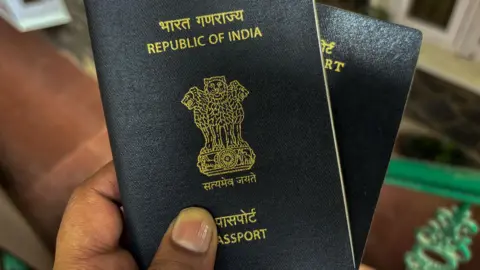
Earlier this year, a video by an Indian travel influencer complaining about the limited power of the Indian passport went viral across digital platforms.
The influencer stated that while nearby nations such as Sri Lanka and Bhutan offered easier access of travelers from India, securing travel permits to travel to most Western and European countries remained a challenge.
Such concerns with the limited global access of Indian passports found confirmation in the latest Henley Passport Index, ranking the country in the 85th spot out of nearly two hundred nations, five spots lower compared to the previous year.
The Indian government have not issued a statement on the report yet.
Countries like Ghana, Rwanda and Azerbaijan despite smaller economic size compared to India – a nation that is the fifth-largest economy globally – are ranked higher on the index in the seventies range, respectively.
Actually, the country's position over the last ten years has remained in the 80s, even dipping to ninetieth place in 2021. These rankings appear poor compared to Asian nations such as Japan, South Korea and Singapore, all maintaining top positions.
Global Passport Power Indicates
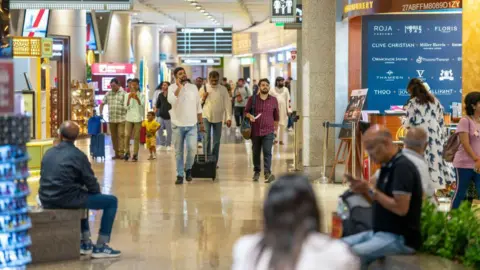
The power of a passport reflects a nation's soft power and global influence. This leads to enhanced travel freedom for its citizens, improving commercial and learning opportunities. A weak passport results in more paperwork, higher visa costs, fewer travel privileges and extended processing periods when journeying.
But despite the drop in position, the count of nations providing visa-free travel to Indians has grown in the past decade or so.
For example, eight years ago – the year the current administration's Bharatiya Janata Party (BJP) assumed office – fifty-two nations offered visa-free access to Indians and its passport at seventy-sixth position on the index.
The following year, it tumbled to the 85th position, then rose to eightieth in 2023 and 2024, dropping again to the eighty-fifth spot this year. At the same time, countries allowing visa-free travel for Indians grew from 52 in 2015 to 60 in 2023 and sixty-two this year.
The Competitive Global Mobility Landscape
The number of visa-free destinations this year (57) exceeds what it was eight years ago (fifty-two), yet the country's position during both periods remains at eighty-fifth. So, why is that?
Analysts note that a major reason is the increasingly competitive landscape in international travel – indicating that nations are forming more travel partnerships for their populations' advantage and economic growth. According to recent analysis, the global average number of destinations travellers are able to access visa-free has almost doubled from fifty-eight nineteen years ago to one hundred nine currently.
As an illustration, China has increased its count of visa-free countries available to its citizens from fifty to eighty-two in the past decade. As a result, its position in the ranking has improved from 94th to 60th in that same duration.
Meanwhile, The Indian passport – which was ranked 77th on the index in July – fell to eighty-fifth place in October following the loss of two nations.
Other Influences Affecting Passport Strength
A former Indian ambassador notes multiple elements influencing a nation's passport power, including economic and political conditions plus its receptiveness to accepting travelers from abroad.
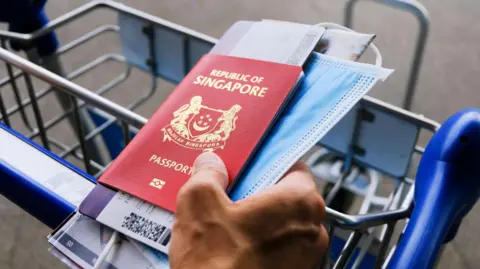
For instance, the American passport has fallen of the top 10 currently holding twelfth place – its lowest ever – because of its more inward-looking approach in global affairs.
The former ambassador recalls how in the 1970s, Indians enjoyed visa-free access to many Western and European countries, though this shifted after the Sikh separatist movement in the 1980s. Later political disturbances have continued to damage at India's image as a stable, democratic country.
"Many countries are also becoming increasingly wary of immigrants," he stated. "The country possesses a high number of people migrating overseas or overstaying their visas affecting the country's reputation."
Factors like how secure a country's passport is and immigration processes also contribute to obtaining visa-free entry to foreign nations.
Enhanced Security Measures
The Indian passport faces ongoing security threats. Last year, law enforcement detained 203 people for suspected visa and passport fraud. India is also known for cumbersome immigration procedures and a slow pace of visa processing.
The former ambassador says that new technologies, like India's recently-launched electronic passport or e-passport, may enhance safety and streamline immigration. The e-passport includes a microchip holding biometric data, increasing difficulty to forge or tamper with the passport.
But, increased diplomatic efforts and travel agreements continue essential to boosting the global mobility of Indians and, by extension, India's passport ranking.

